11 Best Places to Visit in Morocco (2026 Guide)
The best places to visit in Morocco range from lantern-lit medinas and blue mountain towns to Atlantic beaches and star-filled Saharan dunes, all within a few hours of each other by road or rail. This guide covers 11 destinations, from the imperial cities to the desert and the High Atlas, with the highlights, best-for tips and practical advice you need to decide where to go and how to link it all into one trip.
For more destination inspiration, visit the official Morocco tourism website.
Why Visit the Best Places to Visit in Morocco?
Morocco packs more variety into a small area than almost any other destination in Africa or the Mediterranean. In a single week you can wander a thousand-year-old medina, eat grilled sardines beside the Atlantic, hike beneath snow-capped peaks and sleep in a camp among the dunes.
The country also suits many kinds of traveler. Culture seekers get imperial cities, painted madrasas and living craft traditions. Outdoor travelers get the High Atlas, deep canyons and open desert. Families and first-timers benefit from an easy rail network, a wide range of accommodation, from family-run riads to resort hotels, and a food scene built on tagines, couscous, pastilla and fresh mint tea.
For more help planning your route, budget, and travel logistics, see our complete Morocco Travel Guide.
Morocco is also straightforward to enter: visitors from many countries, including the US, UK and EU, can stay up to 90 days without a visa, though you should confirm the rules for your own passport before booking.
Marrakech
Marrakech is Morocco’s most energetic city and the destination most first-time visitors put at the top of their list. Its walled medina, palaces, gardens and rooftop terraces make it an easy base for two to four days, and it is also the main gateway to the Atlas Mountains and the desert.
Jemaa el-Fnaa and the Medina
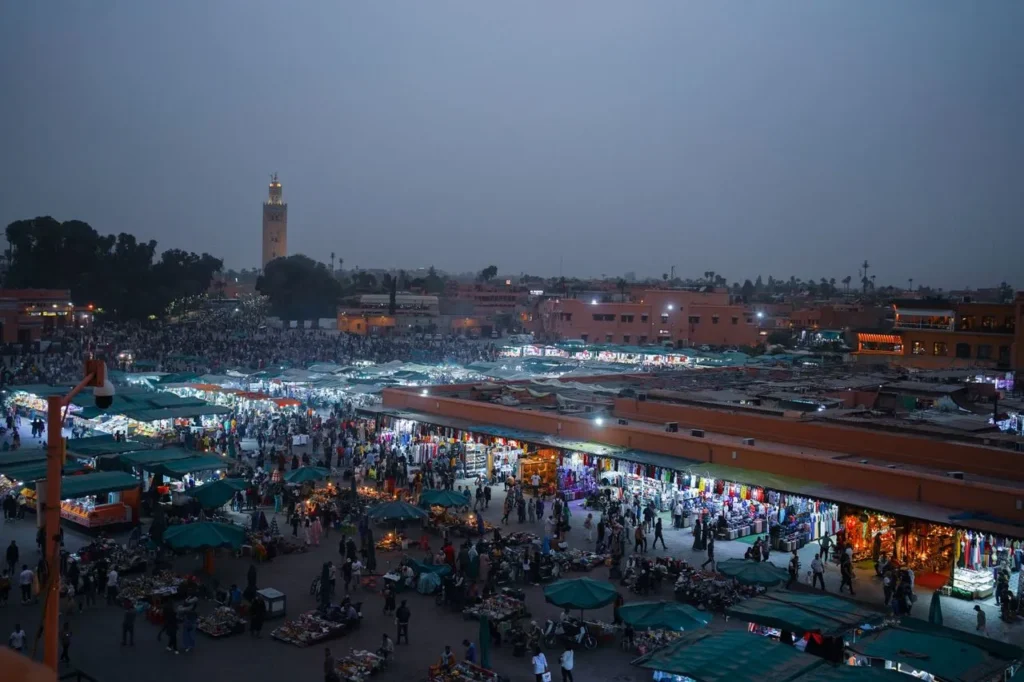
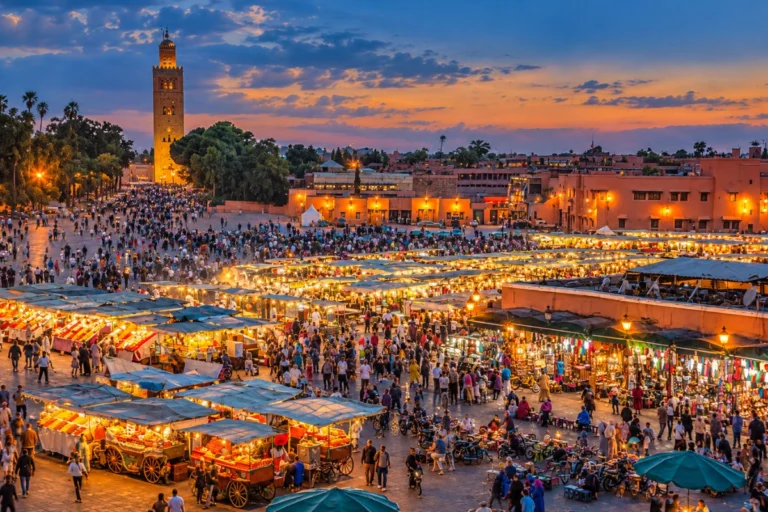
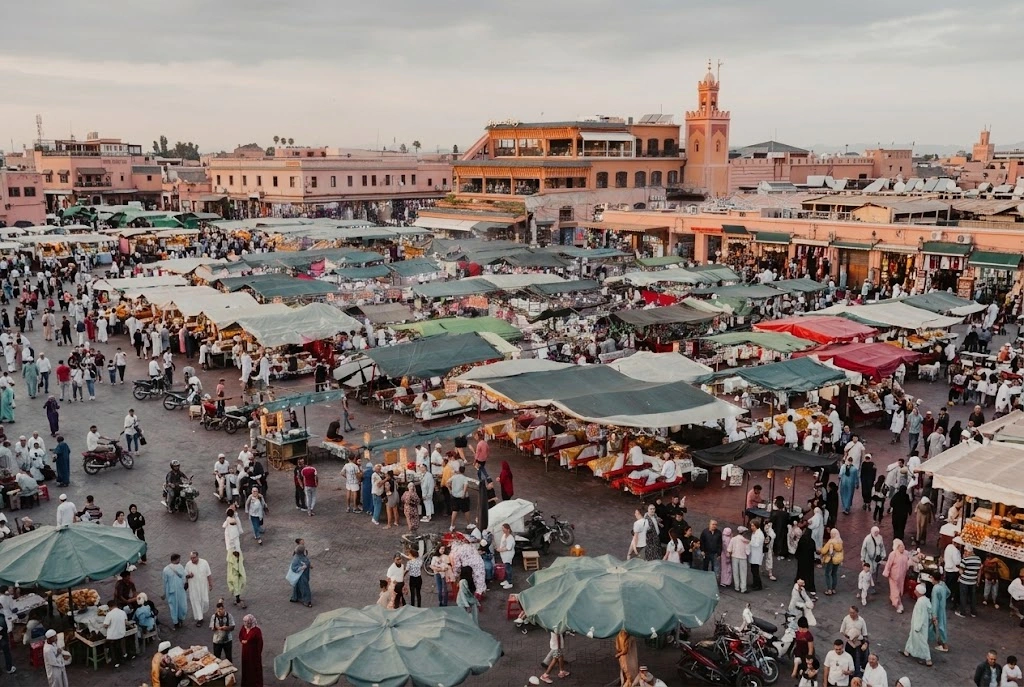
Jemaa el-Fnaa is the city’s central square and its stage. By day it is dominated by juice stalls, snake charmers and henna artists. After sunset it fills with food stalls, storytellers and musicians. Arrive in the late afternoon, grab a rooftop café seat for the view, then step down into the crowd once the lights come on.
The souks that fan out to the north reward slow wandering. Look for leather goods, brass lanterns, woven baskets, spices and ceramics, and expect to bargain.
Bahia Palace and Jardin Majorelle
Bahia Palace is a 19th-century complex of carved cedar ceilings, painted woodwork, zellige tilework and quiet courtyards. Go early, before tour groups arrive.
Jardin Majorelle is a compact garden of cobalt-blue buildings, cacti and bamboo, restored by Yves Saint Laurent and Pierre Bergé. Buy timed tickets in advance in high season, and consider adding the Yves Saint Laurent Museum next door.
Best Things to Do in Marrakech
- Explore the souks with a local guide on your first morning, then return alone to shop.
- Visit the Saadian Tombs, Ben Youssef Madrasa and El Badi Palace for a deeper look at the city’s history.
- Relax in a traditional hammam after a busy day.
- Take a half-day trip to the Agafay Desert or the Ourika Valley.
- Book a cooking class to learn how tagines and Moroccan salads are made.
Best for First-Time Visitors
Marrakech is the best place to start if this is your first trip to Morocco. It has direct international flights, a huge choice of riads and hotels, and enough sights to fill several days. Stay inside the medina for atmosphere, or in Gueliz if you prefer a quieter, more modern base.
Fes
Fes is Morocco’s cultural and spiritual heart, and its old city is the best-preserved medieval medina in the Arab world. Plan at least two nights: the layers of history here take time to absorb.
Fes el-Bali Medina
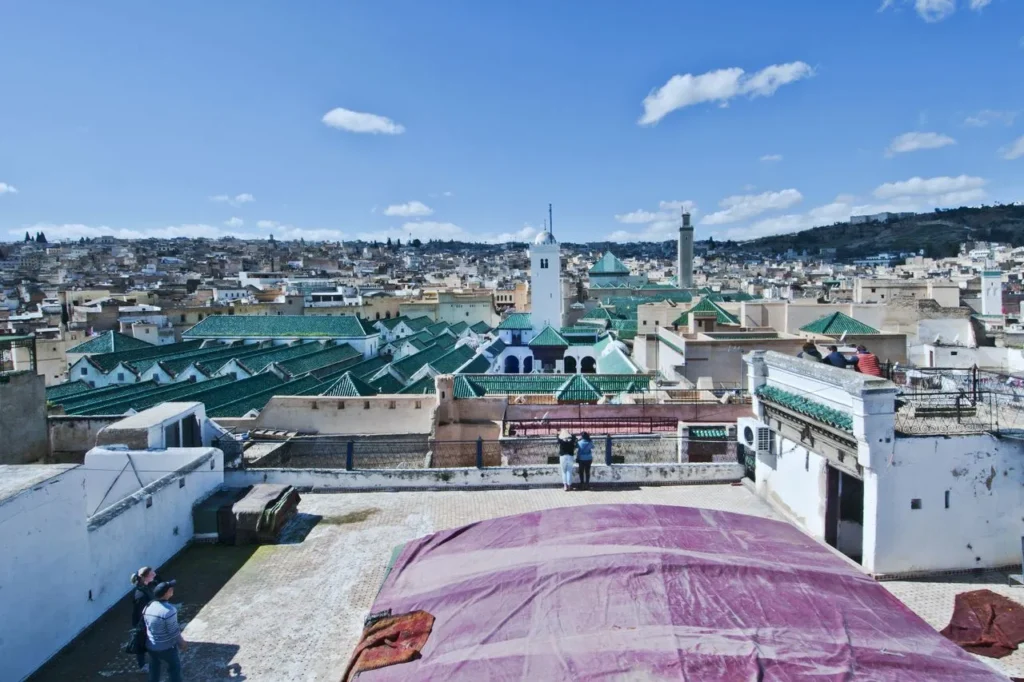
Fes el-Bali, the old walled city, is a UNESCO World Heritage Site and one of the largest car-free urban areas in the world. Its roughly 9,000 lanes are a maze of workshops, fountains, mosques and food stalls, and getting lost is part of the experience. Hire a licensed local guide for the first half-day, then explore at your own pace.
The medina is home to Al-Qarawiyyin, founded in 859 and widely regarded as one of the oldest continuously operating universities in the world. Non-Muslims cannot enter, but you can glimpse the courtyard through its doorways.
Bou Inania Madrasa and the Tanneries
The Bou Inania Madrasa, built in the 14th century, is a showpiece of Marinid architecture, with carved cedar, stucco and mosaic tilework around a peaceful courtyard. Unlike many religious sites in Morocco, it is open to visitors.
The Chouara Tannery is the sight most people remember. Leather has been dyed here in stone vats using traditional methods for centuries. Visit in the morning for the best light, and expect a strong smell; shops around the viewing terraces often hand out mint sprigs.
Best Things to Do in Fes
- Walk the Talaa Kebira and Talaa Sghira, the medina’s two main thoroughfares.
- Browse the metalworkers’ square at Place Seffarine and the ceramics workshops outside Bab Ftouh.
- Climb to the Merenid Tombs at sunset for a panorama over the old city.
- Take a Fes cooking class or a pastilla workshop.
- Add a day trip to the Roman ruins of Volubilis and the city of Meknes.
Best for History and Culture
Fes suits travelers who want depth rather than polish. It is less touristy than Marrakech and has a more traditional feel, with working artisans, family-run restaurants and some of the country’s finest riads. Come with comfortable shoes and a flexible schedule.
Chefchaouen
Chefchaouen is a small mountain town in northern Morocco, famous for streets painted in shades of blue. It is slower, cooler and quieter than the big cities, which makes it a welcome break between busier stops. Allow one to two nights.
The Blue Medina
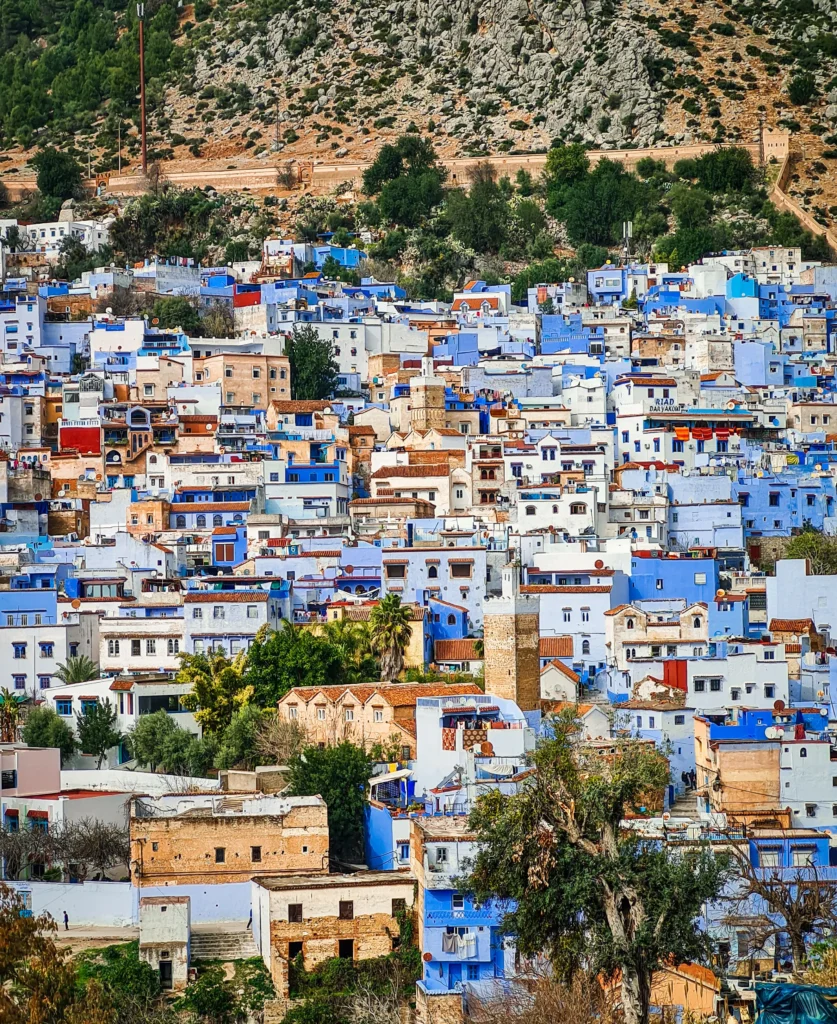
Whitewashed walls, blue-washed doorways, potted plants and steep stairways make the medina feel more like a village than a city. The town was founded in the 15th century and later received Andalusian refugees, whose influence is visible in the architecture. The main square, Plaza Uta el-Hammam, is a good place to sit with a mint tea next to the old kasbah.
Wander without a map, and head out early or late to avoid the day-trip crowds.
Rif Mountain Views
Chefchaouen sits at the foot of the Rif Mountains, and the surrounding hills are only minutes away on foot. The short climb to the Spanish Mosque viewpoint is the classic sunset walk, with views across the town to the peaks behind. For something longer, drive or take a taxi to Akchour, about 30 km away, for waterfalls and the God’s Bridge rock arch in Talassemtane National Park.
Best Things to Do in Chefchaouen
- Take photographs in the blue lanes at first light.
- Visit the Kasbah museum and its small garden.
- Shop for woven blankets, goat cheese and local honey.
- Hike to the Ras el-Maa waterfall at the edge of town.
- Join a day hike to Akchour from the town.
Best for Photography and Relaxed Exploring
Chefchaouen is ideal for photographers, slow travelers and couples looking for a gentler pace. It also works well as a stop between Tangier and Fes.
Casablanca
Casablanca is Morocco’s largest city and its commercial hub. It is less about ticking off sights and more about seeing how Morocco lives today, with wide boulevards, busy cafés and a long Atlantic waterfront. One night or a day stop is enough for most itineraries, especially if you land at Mohammed V International Airport.
Hassan II Mosque
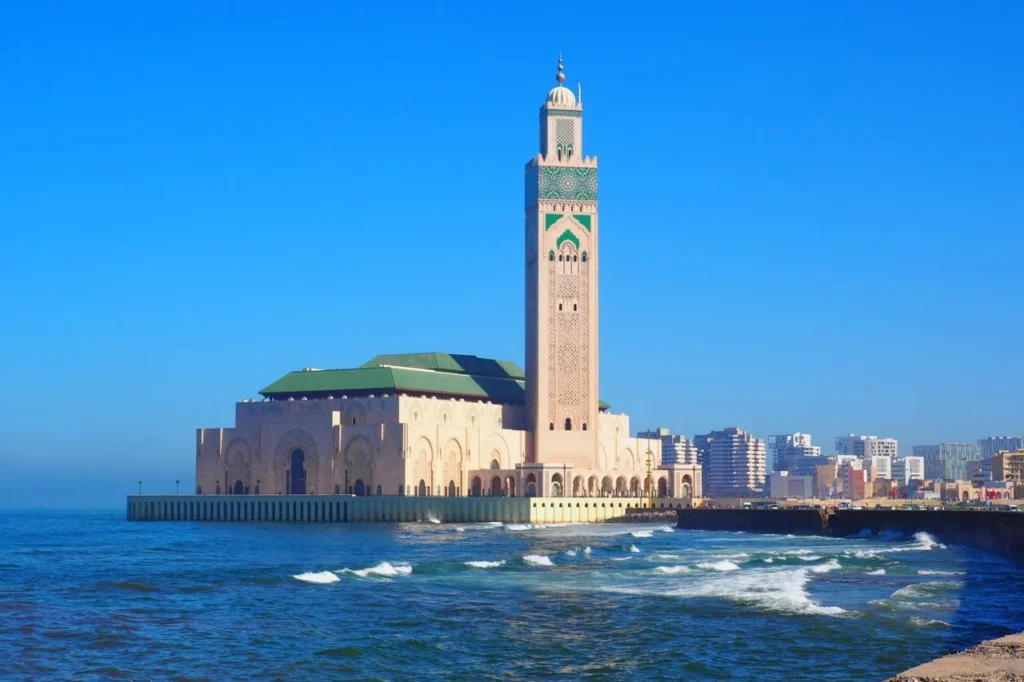
The Hassan II Mosque is the one must-see. Completed in 1993 on a platform over the ocean, it has a minaret of about 200 meters, among the tallest in the world, and a prayer hall that can hold tens of thousands of worshippers. It is one of the few mosques in Morocco that non-Muslims can enter on a guided tour, so book a slot in advance and dress modestly.
Art Deco Architecture and the Corniche
The downtown area around Boulevard Mohammed V and Place des Nations Unies has one of the richest collections of Art Deco and Mauresque buildings in Africa, a legacy of the French protectorate. Walk the streets with a coffee in the morning, then visit the Central Market for seafood.
In the afternoon, head to the Corniche in Ain Diab for beach clubs, seafood restaurants and sunset views. Rick’s Café, a recreation inspired by the 1942 film, is a popular if touristy stop.
Best for Modern City Life
Casablanca is best for travelers who enjoy urban energy, contemporary art galleries, restaurants and nightlife. It is also the rail hub of the country, with direct trains to Rabat, Tangier, Marrakech and Fes.
Rabat
Rabat, Morocco’s capital, is calmer, greener and more orderly than most Moroccan cities. Its historic core and modern capital together form a UNESCO World Heritage Site. A day trip from Casablanca is possible, but one night lets you enjoy it properly.
Kasbah of the Udayas
The Kasbah of the Udayas is a 12th-century fortress above the mouth of the Bou Regreg river. Its blue-and-white lanes are quiet and uncrowded. Walk to the Andalusian Gardens, have mint tea and pastries at Café Maure with views over the river and ocean, then stroll down to the beach and the old medina.
Hassan Tower and the Mausoleum of Mohammed V
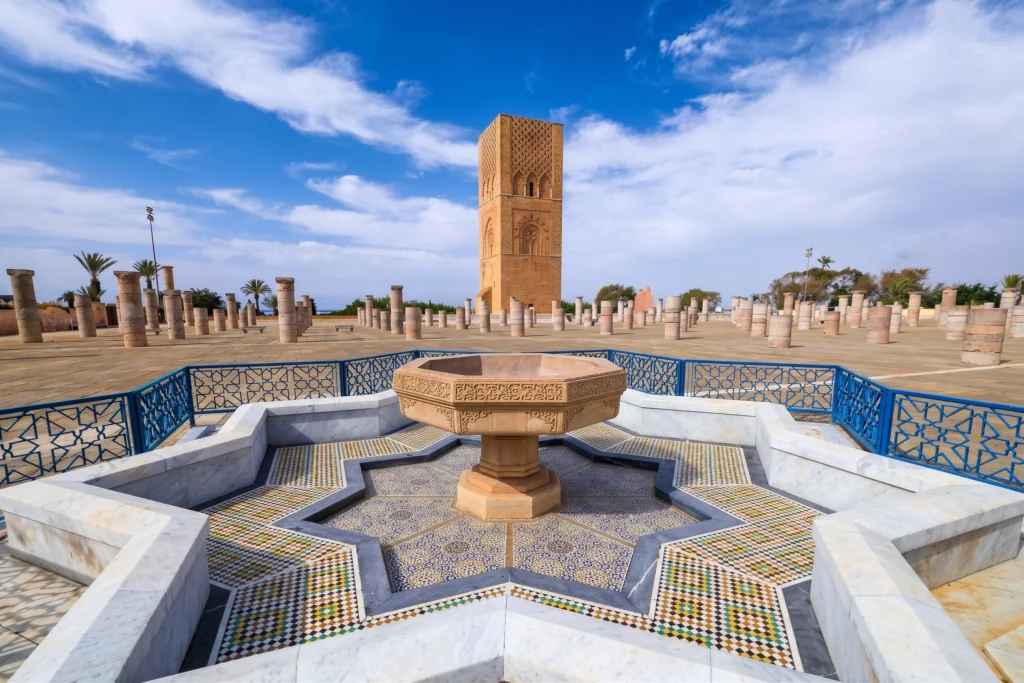
The Hassan Tower is the unfinished minaret of a mosque that was planned in the 12th century and left incomplete. Rows of stone columns stand where the prayer hall would have been. Across the esplanade, the white-and-green Mausoleum of Mohammed V is one of Morocco’s most refined modern monuments, with detailed tilework and carved plaster.
The Roman and Merenid ruins of Chellah, on the edge of the city, are a short taxi ride away and are known for their nesting storks.
Best for a Calm Capital-City Visit
Rabat is a good choice for travelers who prefer a relaxed pace, museums and wide pedestrian-friendly streets. It is also an easy stop on the train between Casablanca and Tangier.
Essaouira
Essaouira is a relaxed, windswept port town on the Atlantic coast, about three hours by road from Marrakech. Its whitewashed walls, blue shutters and working fishing harbor give it a laid-back character that contrasts with the inland cities. Two nights is ideal.
The Historic Medina and Skala de la Ville
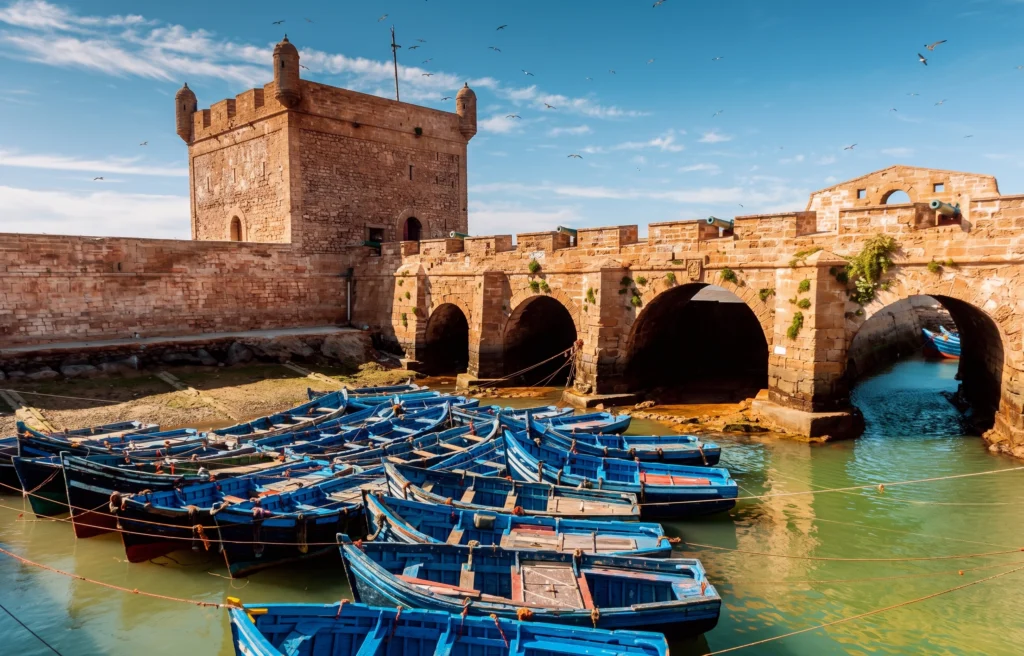
The medina is a UNESCO World Heritage Site, laid out in the 18th century on a grid that makes it much easier to navigate than Fes or Marrakech. It is known for woodwork, especially thuya wood, as well as art galleries and small music shops.
The Skala de la Ville is the sea bastion on the northwest side of the old town, lined with historic cannons. Walk the ramparts at sunset for views over the rocks, the ocean and the islands offshore.
Beaches, Seafood, and Windsurfing
Strong, steady winds make Essaouira one of Morocco’s best spots for windsurfing and kitesurfing, especially in summer. The long town beach is also good for walking, riding camels or horses at low tide, and learning the basics with a local school.
For lunch, choose a grill by the port, where you pick fresh fish, sardines and shellfish from the stalls and have it cooked on the spot.
Best for a Coastal Escape
Essaouira is ideal for travelers who want sea air, art and a slower pace after the intensity of Marrakech. It is cooler than inland Morocco in summer, though the wind can make the beach less comfortable for swimming than for water sports.
The Sahara Desert
A night in the Sahara is the experience many visitors remember longest. The dunes of southeastern Morocco are reachable by road, and you do not need desert experience to enjoy them, though you do need time: the journey is long, so plan at least two nights, ideally three.
Merzouga and the Erg Chebbi Dunes
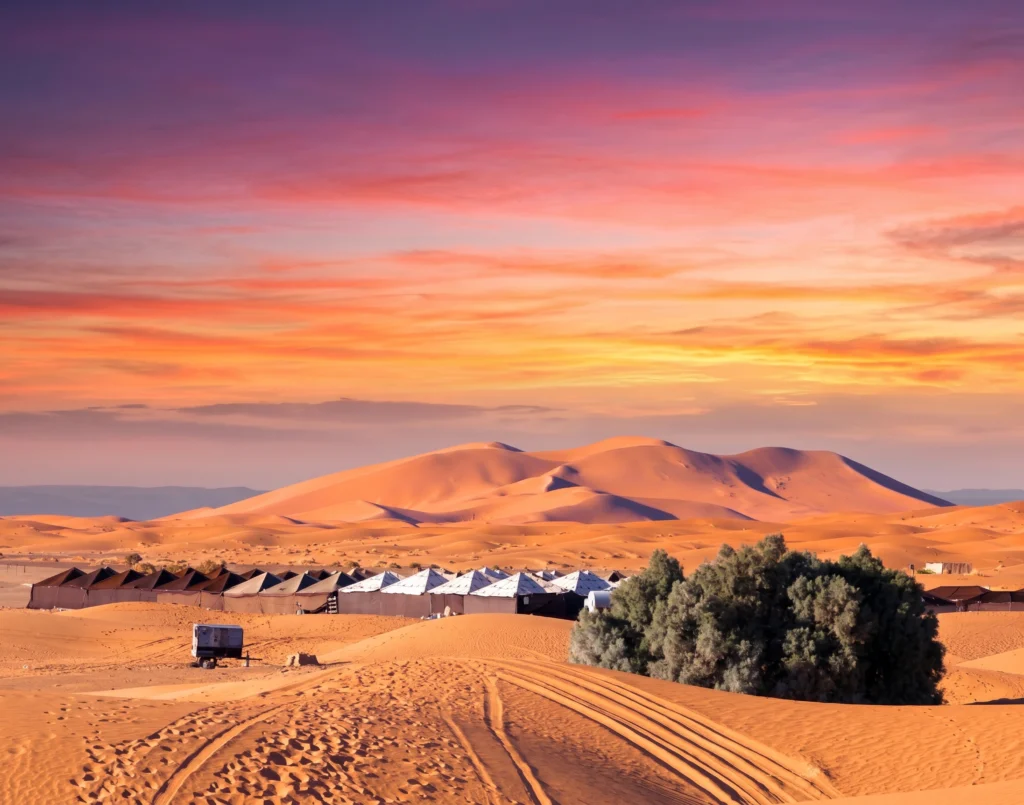
Merzouga is the small desert village on the edge of Erg Chebbi, a sea of golden-orange dunes that can rise well over 100 meters. It is the most popular Saharan base in Morocco. Trips usually start from Marrakech or Fes; the drive takes roughly 9 to 10 hours from Marrakech, so most travelers break it up with overnight stops in the Dades Valley or Aït Benhaddou.
Desert Camps and Camel Treks
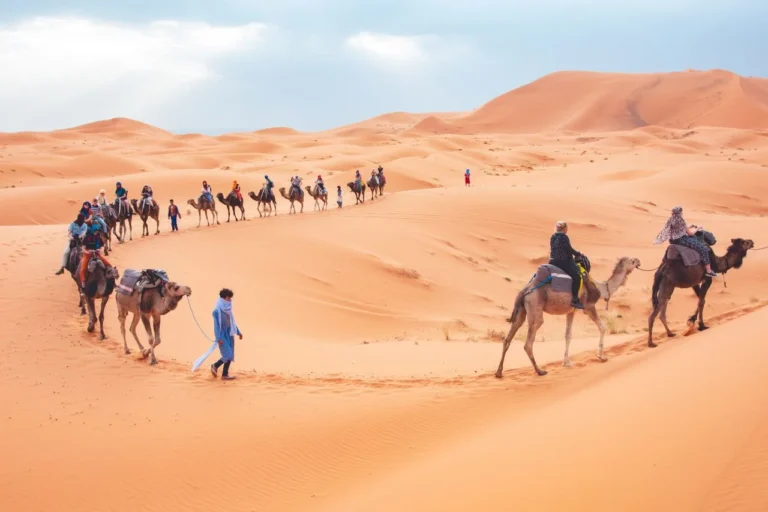
Most visitors reach the dunes on a short camel trek at sunset, then spend the night in a Berber-style tent camp with dinner, music and a sky full of stars. Camps range from simple tents with shared bathrooms to luxury tents with private bathrooms and heating. Compare what is included before booking, and ask whether sunrise treks, sandboarding and quad bikes are part of the price.
For a quieter option, consider Erg Chigaga, a larger and more remote dune field near M’Hamid that takes more time to reach and usually has fewer visitors.
Best Time to Visit the Sahara Desert
The best months are October to April, when days are warm and nights are cool. Winter nights can get very cold, so bring layers. Summer temperatures are extreme, often above 40 °C during the day, and most visitors avoid the dunes between June and August. Spring can bring sandstorms, so keep an eye on the forecast.
The Atlas Mountains
The High Atlas rises less than two hours from Marrakech and offers a complete change of scenery: cool air, terraced valleys, walnut groves and some of the best hiking in North Africa. It works as a half-day escape or a multi-day trek.
Imlil and Mount Toubkal
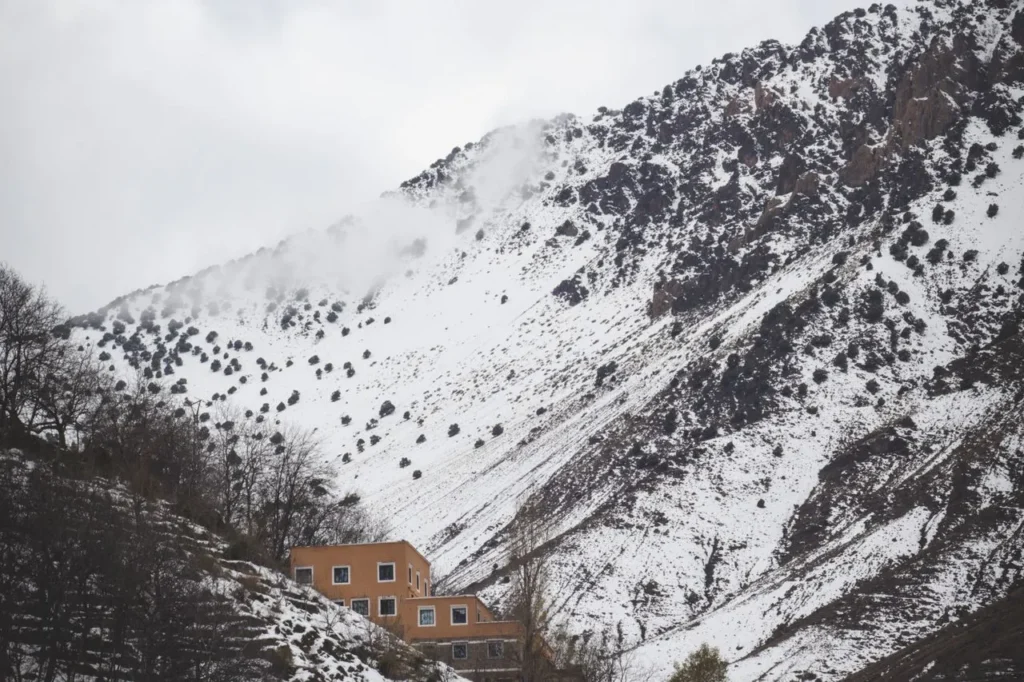
Imlil is a mountain village about 65 km from Marrakech and the usual starting point for climbing Mount Toubkal, which at roughly 4,167 meters is the highest peak in North Africa. The standard route from Imlil to the Toubkal refuge and the summit is non-technical but demanding because of the altitude gain, and most hikers do it in two days. Spring (April to May) and autumn (September to October) are generally the best seasons. Winter brings snow and ice and calls for mountaineering skills and equipment.
If you are not planning to summit, Imlil is still a pleasant base for easy walks to nearby villages and waterfalls, with simple guesthouses and mountain views.
Berber Villages and Mountain Valleys
The High Atlas is home to Amazigh (Berber) communities who have farmed these valleys for generations. The Ourika, Ait Bouguemez (known as the Happy Valley) and Tizi n’Tichka routes pass villages, kasbahs and orchards, with lunch stops in family-run guesthouses. A visit to a village women’s cooperative is a good way to buy argan oil or woven rugs directly from the makers.
Best for Hiking and Outdoor Adventures
The Atlas Mountains are best for hikers, trekkers and anyone who wants to escape the heat of the plains. Hire a local guide for longer routes and for any summit attempt, check weather and trail conditions locally, and take altitude seriously: spend a night at Imlil or the refuge before pushing for the top.
Aït Benhaddou and Ouarzazate
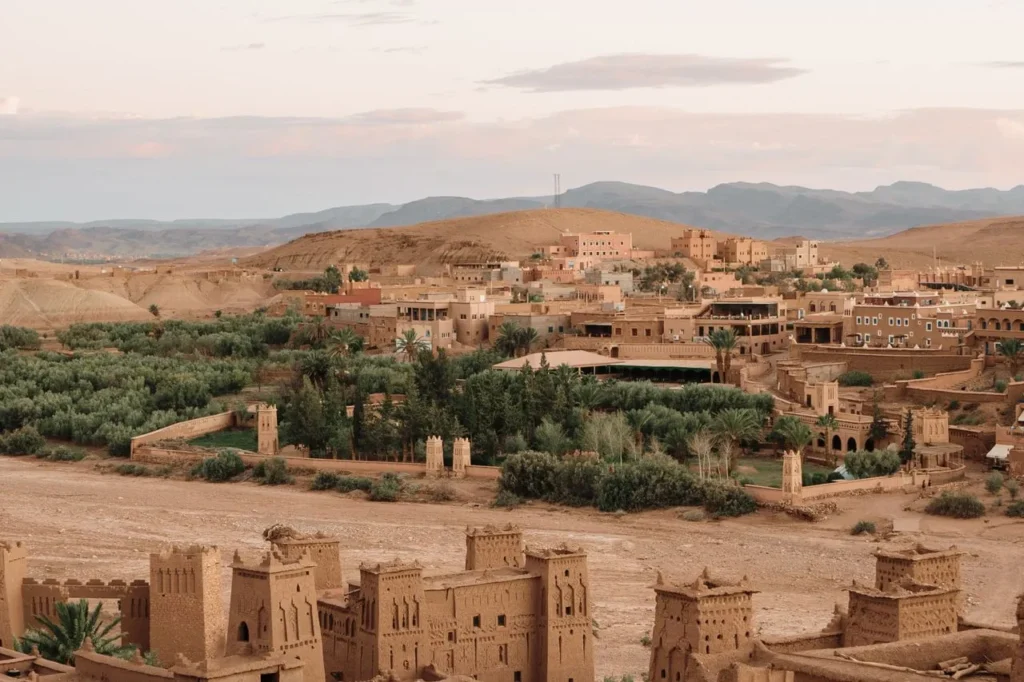
These two stops on the road between Marrakech and the Sahara show off southern Morocco’s mud-brick architecture and film heritage. Aït Benhaddou is the main attraction; Ouarzazate is the practical base nearby.
Exploring the Aït Benhaddou Ksar
Aït Benhaddou is a fortified village, or ksar, of earthen buildings stacked up a hillside above a dry riverbed. It is a UNESCO World Heritage Site and one of the best surviving examples of southern Moroccan clay architecture. Cross the river on foot or over the stepping stones, climb through the narrow lanes, and finish at the hilltop granary for views across the valley.
Go in the early morning or late afternoon to avoid crowds and for the warmest light on the walls. Staying overnight in a guesthouse in the new village lets you see the ksar at sunrise and sunset.
Film Studios and Desert Landscapes
Ouarzazate, about 30 km away, is known as Morocco’s film capital. The Atlas Studios and CLA Studios have been used for many international productions, and visitors can tour sets and props. Aït Benhaddou itself has appeared in numerous films and TV series.
In the surrounding landscape, desert plains, palm groves and kasbahs such as Taourirt Kasbah make the area a pleasant stop for photography.
Best for History and Scenic Road Trips
This area is best for travelers heading toward the Sahara or the Dades Valley who want a half-day of history, architecture and cinema on the way. The drive over the Tizi n’Tichka pass from Marrakech has dramatic switchbacks and mountain views, so allow extra time for photo stops.
Tangier
Tangier sits at the northwestern tip of Africa, where the Atlantic meets the Mediterranean and Spain is visible across the Strait of Gibraltar. It has long been a meeting point for Arab, Berber, European and American cultures, and today it is one of Morocco’s most dynamic cities. Allow one to two nights.
The Kasbah and Medina
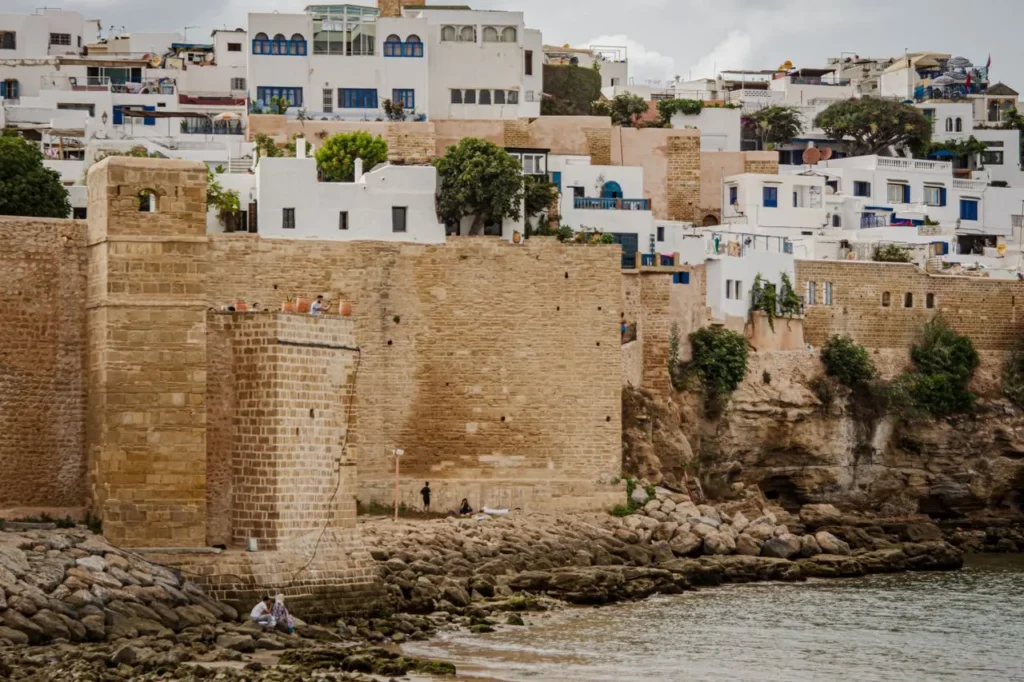
The old medina climbs from the port to the Kasbah, a hilltop fortress district with a palace museum, narrow lanes and wide views of the Strait. Wander down to the Petit Socco, the small square that was once the heart of the city’s international community, and the Grand Socco, where the old city meets the new.
Tangier’s café culture is part of its charm. Café Hafa, a terraced café overlooking the sea, has been serving mint tea for generations and is a favorite with writers and artists.
Cap Spartel and the Caves of Hercules
Cap Spartel, a short drive west, is the point where the Atlantic and Mediterranean are said to meet, with a lighthouse and a cliffside viewpoint. Nearby, the Caves of Hercules are a sea cave with an opening that is said to resemble the outline of Africa, and a popular stop for visitors.
Best for Mediterranean Views and Cultural Connections
Tangier is a good fit for travelers arriving from Spain by ferry, those continuing on to Chefchaouen, and anyone interested in the city’s literary and cultural history. The Al Boraq high-speed train connects it with Rabat and Casablanca in about two hours.
The Dades and Todra Gorges
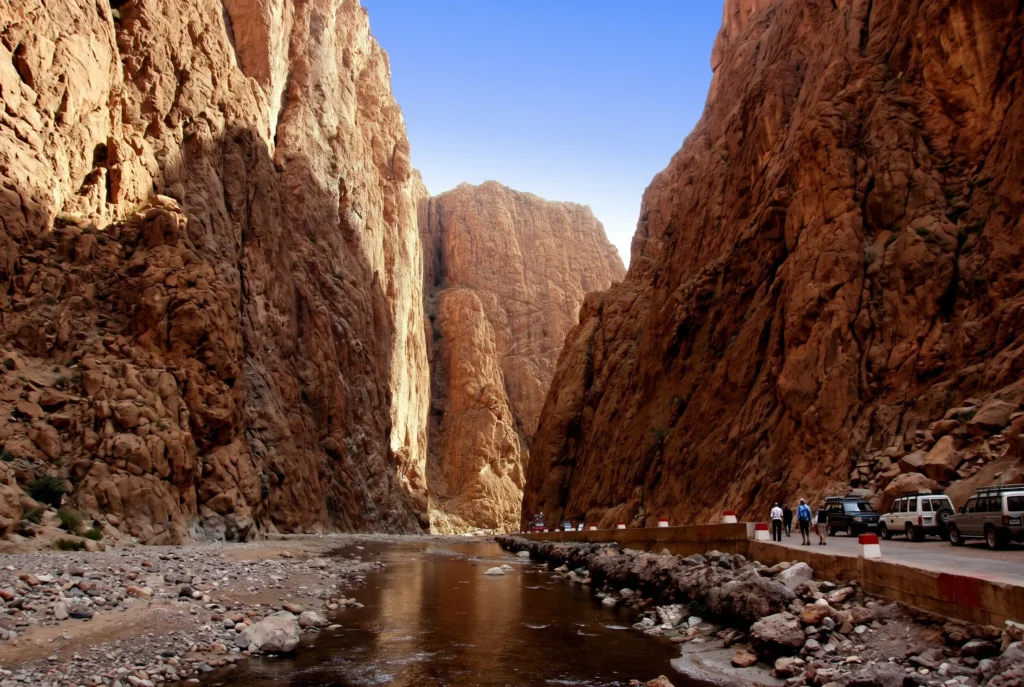
The Dades and Todra Gorges, in the Atlas foothills east of Ouarzazate, are two of Morocco’s most dramatic landscapes. They sit on the classic route between Marrakech and the Sahara and are best explored with at least one overnight stay.
Dramatic Canyon Scenery
The Todra Gorge narrows to a corridor with sheer limestone walls that rise to around 300 meters on either side. A paved road runs through it, and a stream and palm grove make the lower section pleasant to walk. The Dades Gorge is wider and more varied, with red rock formations, villages and hairpin roads. The stretch known as the Monkey Fingers is the best known for its unusual rock shapes.
Hiking and Scenic Road Trips
The Dades Valley’s winding road, with its zigzag switchbacks above the gorge, is one of the most photographed drives in the country. Hikes range from short walks along the river to full-day loops through villages and palm groves. Rock climbing routes are also popular around Todra, and local guides can arrange routes for different levels.
Best for Nature and Adventure
The gorges are best for travelers who enjoy hiking, climbing and road trips, and for those who want a scenic, less crowded stop before or after the Sahara. Spring and autumn offer the most comfortable temperatures; winter mornings can be very cold, and summer afternoons hot.
How to Choose the Best Places to Visit in Morocco
The best places to visit in Morocco for you depend on how much time you have and what you enjoy. Distances are bigger than they look on a map, so choosing fewer destinations usually makes for a better trip.
Best Moroccan Destinations for First-Time Visitors
Marrakech, Fes and the Sahara are the classic first-time trio, covering the medina experience, the historical heart and the desert. Add Chefchaouen if you want a calmer mountain town, or Essaouira for a day or two on the coast.
Best Places for Culture, Beaches, and Adventure
| Interest | Best places |
|---|---|
| Culture and history | Fes, Marrakech, Rabat, Aït Benhaddou |
| Beaches and coast | Essaouira, Casablanca’s Corniche, Tangier |
| Hiking and adventure | Atlas Mountains, Dades and Todra Gorges, Sahara |
| Relaxed, scenic stops | Chefchaouen, Essaouira, Rabat |
| Modern city life | Casablanca, Rabat, Tangier |
Suggested Morocco Itineraries by Trip Length
| Trip length | Suggested route |
|---|---|
| 3 to 4 days | Marrakech, with a day trip to the Atlas Mountains or Essaouira |
| 5 to 7 days | Marrakech, Aït Benhaddou, Merzouga (Sahara) and back, or Marrakech, Essaouira and the Atlas |
| 8 to 10 days | Marrakech, Aït Benhaddou, Dades Gorge, Merzouga, Fes and Chefchaouen |
| 12 to 14 days | Tangier, Chefchaouen, Fes, Merzouga, Dades Gorge, Aït Benhaddou, Marrakech, Essaouira, Casablanca |
Most visitors fly into Marrakech or Casablanca and fly out of Marrakech, Fes or Tangier, so look at open-jaw flights to avoid backtracking.
Best Time to Visit Morocco
Spring (March to May) and autumn (September to November) are the best times to visit Morocco, with warm days, cooler evenings and comfortable conditions in most regions.
| Season | What to expect |
|---|---|
| Spring (March to May) | Pleasant temperatures, green hills, wildflowers in the Atlas; good for cities, hiking and the desert |
| Summer (June to August) | Very hot inland, above 40 °C in Marrakech and the Sahara; best for the Atlantic coast (Essaouira) and the mountains |
| Autumn (September to November) | Warm and stable weather; good for trekking and all-round travel |
| Winter (December to February) | Mild on the coast and in the south; cold nights in the Atlas and desert, with snow on the High Atlas peaks |
Ramadan dates move each year. Many restaurants close during the day and opening hours change, but evenings are lively, and visiting can be a rewarding cultural experience if you plan around it.
Practical Tips for Traveling Around Morocco
Morocco is easy to travel once you know the basics. Entry is visa-free for up to 90 days for visitors from many countries, but check your own passport’s rules, and note that some governments advise travelers to hold a passport valid for at least six months on arrival.
Getting Between Destinations
- Trains: ONCF runs a reliable network linking Tangier, Rabat, Casablanca, Marrakech and Fes. The Al Boraq high-speed train connects Tangier and Casablanca in about two hours, and an extension to Marrakech is under construction. The Fes to Marrakech train takes roughly seven hours. Book first-class or second-class seats in advance on busy days.
- Buses: CTM and Supratours run comfortable long-distance coaches to places the train does not reach, including Essaouira, Chefchaouen and Merzouga.
- Taxis: Petit taxis are for short rides within cities; ask for the meter. Grand taxis are shared cars for set routes between towns.
- Private drivers and tours: For the Sahara, the Atlas and the gorges, a private driver or small-group tour saves time and makes it easier to stop along the way.
Local Customs and What to Wear
Morocco is a Muslim-majority country, and modest clothing is appreciated, especially outside the main tourist areas. Cover shoulders and knees, and carry a light scarf for visiting religious sites where permitted. Ask permission before photographing people, and avoid public displays of affection. Use your right hand for eating and greeting, and accept mint tea when offered; it is a sign of hospitality.
Safety, Bargaining, and Staying Connected
Morocco is generally safe for visitors, but petty theft and persistent touts exist, particularly in busy medinas. Keep valuables out of sight, agree prices for guides and taxis before you start, and use licensed guides, who carry an official badge. In the souks, bargaining is normal: start well below the first price, stay friendly and be ready to walk away.
Carry some cash in Moroccan dirhams, since many small shops and taxis do not take cards. Local SIM cards from Maroc Telecom, Orange and inwi are cheap and easy to buy at the airport, and eSIMs are widely supported. Check your government’s latest travel advice before you leave.
Frequently Asked Questions
What Is the Best Place to Visit in Morocco for the First Time?
Marrakech is the best first stop. It has the most direct flights, a wide range of hotels and riads, and enough to see for three or four days, and it is a convenient base for trips to the Atlas Mountains, Essaouira and the desert.
How Many Days Do You Need to Explore Morocco?
Seven to ten days is a good minimum to cover Marrakech, the desert and one northern city such as Fes. With 12 to 14 days you can add Chefchaouen, Essaouira and Rabat or Casablanca without rushing.
What Are the Best Cities to Visit in Morocco?
Marrakech, Fes, Rabat, Casablanca, Tangier and Essaouira are the most visited cities. Marrakech is best for atmosphere, Fes for history, Rabat for a calm capital, Casablanca for modern life, Tangier for coastal views and Essaouira for the seaside.
Is Morocco Suitable for a Family Holiday?
Yes. Many families enjoy Morocco, especially with children old enough to handle long drives and busy medinas. Good choices include riads with pools, camel rides, beach time in Essaouira and cooking classes. Plan shorter driving days, and keep a flexible schedule in hot months.
Can You Visit the Sahara Desert on a Short Trip?
Yes, but a full Merzouga trip from Marrakech or Fes takes at least three days because of the long drive. On a shorter trip, consider the Agafay Desert near Marrakech for a one-night desert-style camp, or fly toward Errachidia to cut driving time.
How Do You Travel Between Cities in Morocco?
Trains are the easiest option between the main cities in the north and west, including the Al Boraq high-speed service between Tangier and Casablanca. Buses and shared grand taxis cover other routes, and private drivers or small-group tours are the practical choice for the Atlas, the gorges and the Sahara.